Spongy Moth


What do you need today?

What's New


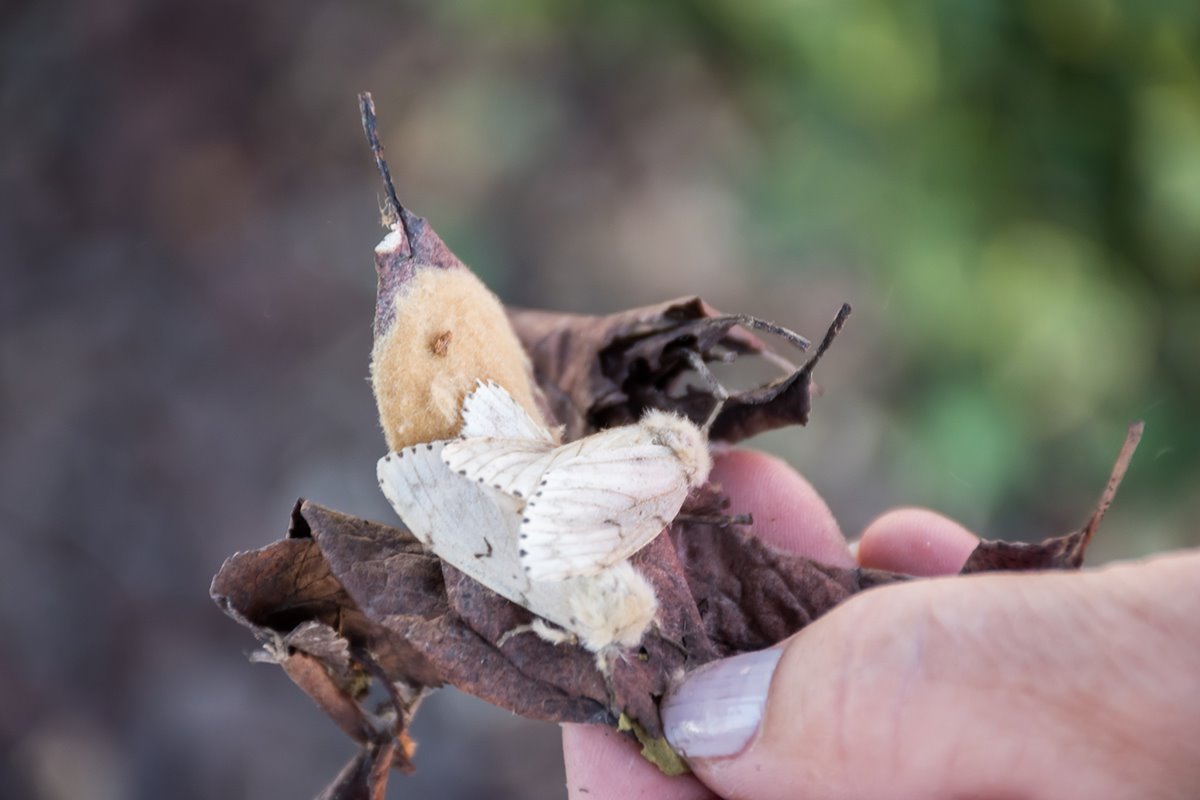
WSDA’s Pest Program visited several sites looking for egg masses of the highly invasive spongy moth. In these egg hunts, the fewer eggs you find, the better. Learn more about the “alternate life stage survey” in the latest blog.
The spongy moth (Lymantria dispar) survey season also wrapped up with a total of 22 moths trapped. Although this was an overall decrease in moths from 2024, there were concerning concentrations of moths detected in both Kent (King County) and Lakewood (Pierce County). Read more in the latest press release.
*The Entomological Society of America has adopted “spongy moth” as the new common name for the species Lymantria dispar. The name refers to the insect’s distinctive sponge-like egg masses and is derived from translations of common names used for the insect in its native range and French-speaking Canada. 

The name replaces “gypsy moth,” which the Entomological Society of America removed from its list of common names in July 2021 due to “gypsy” being a widely acknowledged ethnic slur and the dehumanizing effects of the common name.

We have updated our website and are working to update our publications to reflect these changes. However, historic documents/videos will remain unchanged. 
Learn about spongy moths and why they are a significant threat to the environment. Infographics, videos, blogs, and more.
Each year dozens of trappers set up 20,000 - 30,000 traps throughout the state to monitor for spongy moth introductions. 
Learn about Btk (Bacillus thuringiensis kurstaki), which is a naturally occurring soil bacteria. Btk is what WSDA most commonly uses to eradicate spongy moth introductions. 
Not every spongy moth detection results in an eradication effort. However, when necessary, we conduct eradication efforts to prevent the establishment of spongy moths in Washington. 
Learn more about flighted spongy moth complex.

Contact us

pest@agr.wa.gov
(800) 443-6684
PO Box 42560
Olympia, WA 98504-2560

Stay Informed

Want to stay informed about WSDA's spongy moth project? Join the spongy moth list to sign up for future email updates.


Moving to Washington State?

If you are moving to Washington state from a spongy moth infested state, you are required by federal law to conduct an inspection of your outdoor household articles for spongy moth before you move. Check USDA's Spongy Moth Quarantine Map to find out if you are moving from an infested area.

Instructions for conducting the inspection and filling out a self-inspection form can be found by visiting USDA's Before Moving, Check for the Spongy Moth webpage.

*The Entomological Society of America has adopted “spongy moth” as the new common name for the species Lymantria dispar. The name refers to the insect’s distinctive sponge-like egg masses and is derived from translations of common names used for the insect in its native range and French-speaking Canada. 

The name replaces “gypsy moth,” which the Entomological Society of America removed from its list of common names in July 2021 due to “gypsy” being a widely acknowledged ethnic slur and the dehumanizing effects of the common name.

We have updated our website and are working to update our publications to reflect these changes. However, historic documents/videos will remain unchanged.